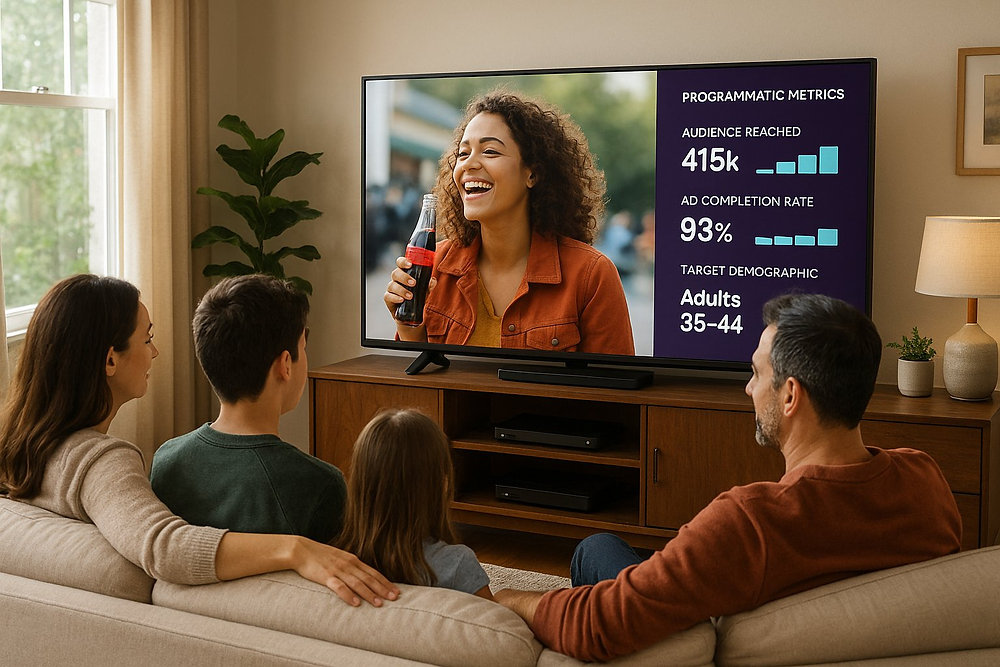
Television audiences have not disappeared. They have moved. Streaming platforms like Hulu, Peacock, and Max now account for a growing share of viewing time that linear broadcast used to own outright, and advertisers are following that shift with budgets, not just interest. Connected TV advertising gives brands access to those audiences with targeting precision that traditional TV buying never offered, and CTV programmatic technology automates that buying at a scale that manual deals cannot match. The combination of television’s visual environment and digital’s data infrastructure is not incremental progress. It is a structural change in how brand advertising operates.
What Makes CTV Advertising So Valuable Right Now
Connected TV advertising runs across smart TVs, Roku, Apple TV, Amazon Fire TV, and gaming consoles, all devices where viewers are actively choosing what they watch rather than passively receiving whatever a broadcast schedule delivers. That active choice creates a more engaged viewing context than linear television, and engagement directly affects how well advertising performs inside it. According to Nielsen’s 2024 streaming report, streaming now accounts for over 40% of total television usage in the United States, with that share continuing to grow quarter over quarter. The audience is there, the content environments are premium, and the data infrastructure that makes precise targeting possible has matured significantly over the past three years. What separates CTV advertising from linear broadcast buying comes down to a few specific capabilities. Audience targeting based on behavioral and demographic data replaces broad demographic proxies. Campaign performance is measurable in real time rather than estimated through panel-based research weeks after the fact. Cross-device identity solutions connect a household’s CTV viewing to other touchpoints, making attribution across the full funnel genuinely possible rather than theoretical.
Choosing the Right CTV Ad Platform
The quality of execution in CTV programmatic campaigns depends heavily on the platform handling the buying. Reporting on view-through rates, completion rates, and audience delivery gives campaign managers the data to make meaningful optimization decisions rather than waiting for end-of-flight summaries. Audience extension across devices connects CTV exposure to downstream behavior on mobile and desktop, which is where most conversions actually happen for direct-response advertisers running brand campaigns on television screens. Brands that work with platforms offering full-funnel visibility and unified data tracking consistently see stronger returns than those managing CTV in isolation from the rest of their media mix.
Programmatic Strategy Tips for Stronger CTV Campaigns
Technical infrastructure sets the ceiling for what programmatic CTV advertising can achieve, but campaign strategy determines whether that ceiling is reached. A few approaches consistently separate well-performing CTV campaigns from average ones. Sequential storytelling across multiple creatives uses the completion-rate advantage of CTV; viewers finish ads at significantly higher rates on connected TV than on mobile to build narrative across exposures rather than repeating the same message. A viewer who sees the first creative in a sequence can be served the second based on their prior exposure, creating a more coherent brand story than a single repeated spot. This approach works well for products with household purchase decisions, from appliances to financial products to streaming subscriptions themselves. A/B testing different creative lengths and formats within the CTV ad platform reveals which combinations of message, duration, and visual approach drive the strongest completion rates and downstream response. Thirty-second spots do not always outperform fifteen-second ones, and testing removes the guesswork. Retargeting based on app installs or website visits connects CTV exposure to audiences already familiar with the brand, increasing the efficiency of upper-funnel spend by concentrating it where purchase intent already exists.
The Future of CTV Programmatic Integration
Programmatic CTV advertising is still in a relatively early stage of its development curve. Several shifts underway will expand what is possible for advertisers willing to build the right infrastructure now. Retail media integration is moving from pilot programs to standard practice. Major retailers with first-party purchase data are building CTV partnerships that allow advertisers to target households based on actual buying behavior and measure campaigns against real sales outcomes rather than modeled attribution. Early data from interactive CTV formats shows meaningfully higher engagement rates than standard video placements. CTV measurement is also converging with the attribution models already established on mobile and web. Cross-device identity solutions are improving, and the gap between what advertisers can measure in digital and what they can measure in CTV is narrowing with each year. Gamoshi’s CTV programmatic infrastructure supports advertisers at this intersection of television reach and digital precision, with integration across leading SSPs, real-time bidding capabilities, and the analytics layer needed to connect CTV exposure to full-funnel performance.
Final Thoughts
The audiences that television advertising was built around have not gone anywhere. They have moved to streaming, and CTV programmatic technology gives advertisers a direct line to those audiences with the targeting and measurement tools that linear broadcast never provided. Whether the objective is broad awareness at national scale or efficient acquisition in a specific demographic, programmatic CTV advertising delivers a level of control and accountability that traditional television buying structurally cannot. The infrastructure exists today. The inventory is premium. The measurement is improving faster than most media buyers realize. Brands that build CTV advertising into their media mix now, with the right CTV ad platform and a coherent programmatic strategy behind it, are not preparing for the future of television advertising. They are competing in it.